
Crash-Proof EA Templates You Can Use in 2026
Automated trading carries risks, but crash-proof EA templates protect capital and limit losses. These templates...


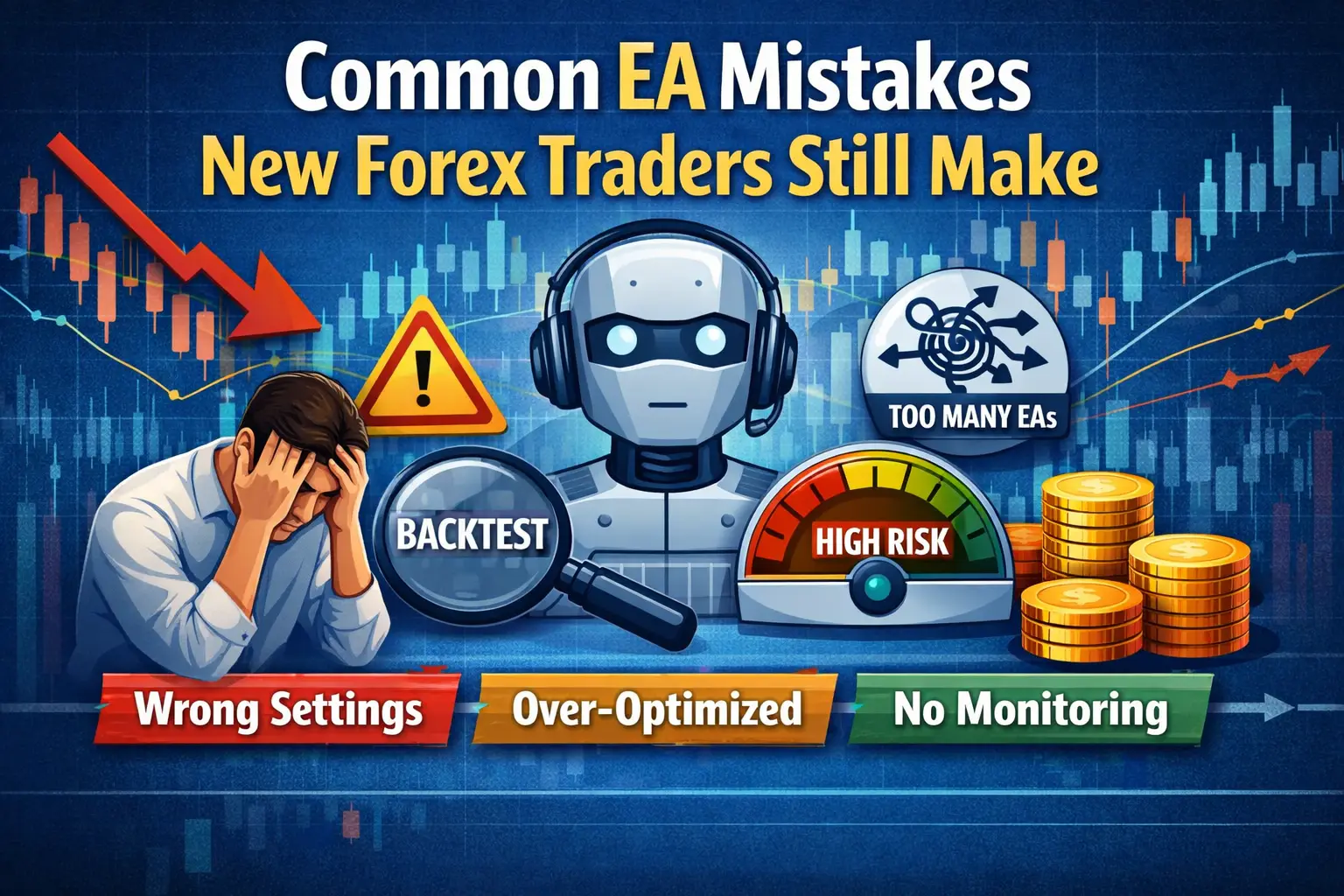
Expert Advisors (EAs) promise automation, consistency, and freedom from emotional trading. Yet most new traders who use EAs end up disappointed, confused, or facing avoidable losses. The problem is rarely the EA alone. In most cases, mistakes in setup, expectations, and usage are the real cause.
This article breaks down the most common EA mistakes new traders still make, explains why they happen, and shows how to avoid them with practical, realistic guidance.
New traders often assume one EA should work in every condition — trends, ranges, high volatility, low volatility, news events, and crashes. This is one of the fastest ways to lose trust in automation.
Markets rotate constantly. A scalping EA struggles during news. A trend EA suffers in ranges. A breakout EA fails in quiet sessions.
Reality:
EAs are strategy-specific tools, not universal solutions. They must match market conditions.
Many beginners install an EA and press “AutoTrade” without adjusting risk parameters. Default settings are often designed for testing, not for real capital protection.
Common errors include:
Reality:
Risk settings matter more than the EA logic itself. Poor risk management can break even the best strategy.
New traders often stack multiple EAs on one account hoping to “diversify.” Instead, they unknowingly create strategy overlap, correlation risk, and margin stress.
For example:
Reality:
More EAs do not mean more safety. Coordination matters more than quantity.
Many traders use EAs without knowing:
When losses happen, they panic because they don’t understand why trades were opened.
Reality:
If you cannot explain how an EA enters and exits trades, you should not run it live.
Backtesting is useful, but new traders often over-optimize parameters until the strategy looks perfect in past data. This creates curve-fitted systems that fail in real markets.
Signs of over-optimization:
Reality:
Robust EAs survive imperfect conditions. Perfect backtests are usually fragile.
Forex behaves differently across sessions:
New traders often run EAs 24/5 without session filters, exposing them to thin liquidity and random spikes.
Reality:
Timing matters. Session filters reduce unnecessary losses.
Many beginners are attracted to recovery-based EAs because they show high win rates. What they don’t see is how losses are delayed, not eliminated.
Typical problems:
Reality:
Uncontrolled recovery strategies fail during strong trends or volatility spikes.
To understand how different automation styles behave, it helps to look at real-world examples used by traders:
These examples are useful for learning how different automation styles behave, not as one-size-fits-all solutions.
Automation does not mean abandonment. Markets change, brokers adjust conditions, spreads widen, and slippage increases.
New traders often:
Reality:
EAs need monitoring, even if trades are automated.
Economic news can cause extreme volatility, spreads spikes, and execution issues. Many EAs are not designed to trade during news releases.
New traders leave EAs running during major announcements, then panic when unexpected losses occur. News filters or manual disabling during events is often necessary.
Reliable economic calendars like Forex Factory help traders anticipate high-impact events:
New traders jump between EAs based on recent performance screenshots, reviews, or promises of “passive income.” This creates constant switching and no learning.
Reality:
Consistency comes from understanding one system well, not chasing the next one.
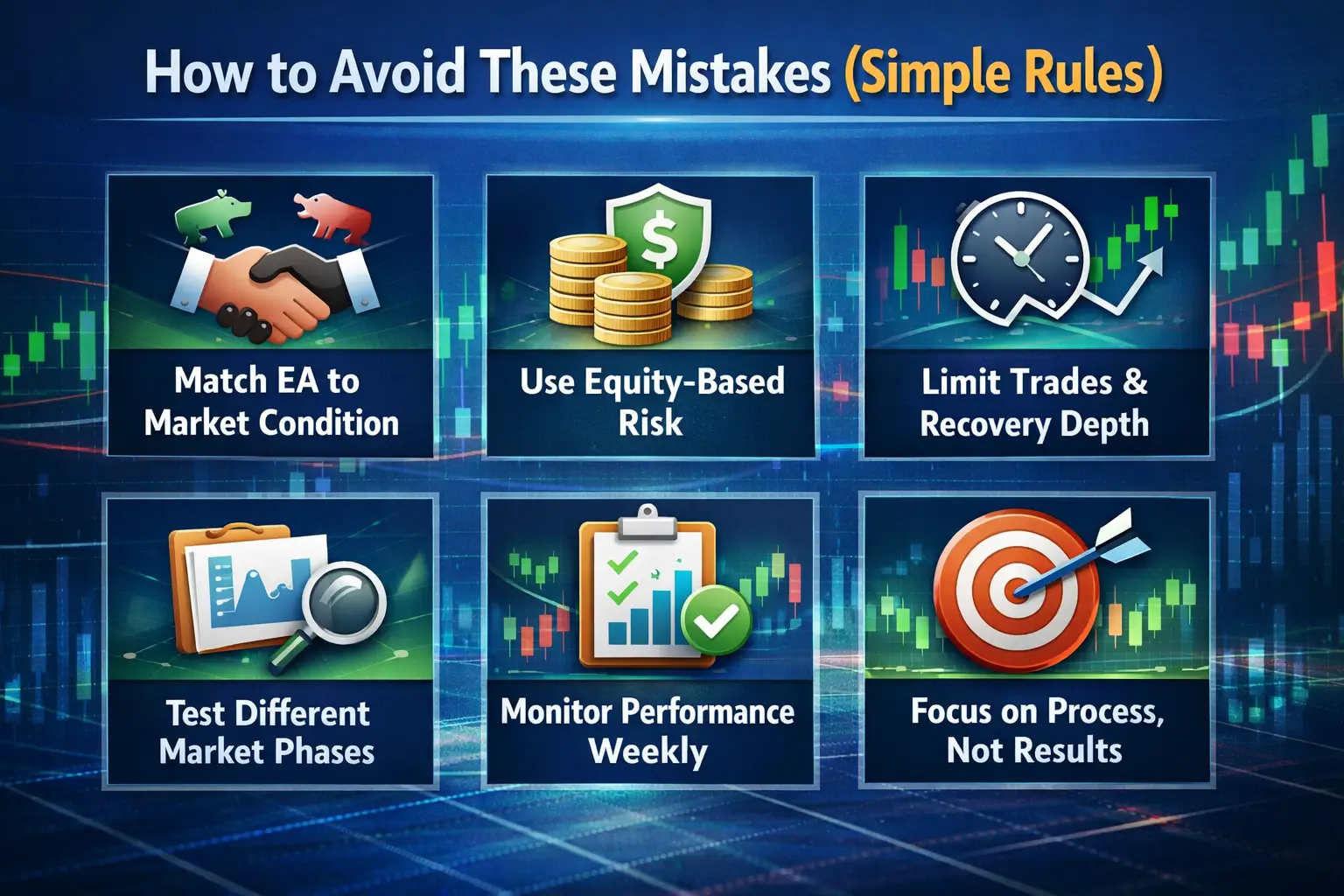
Forex automation is neither magic nor a scam. It is a tool — powerful when used correctly and dangerous when misunderstood. Most EA failures come from human mistakes, not flawed algorithms.
By avoiding unrealistic expectations, respecting risk management, understanding how strategies work, and treating automation as a system rather than a shortcut, traders can use EAs as a genuine support tool instead of a recurring disappointment.
Automation works best when paired with knowledge, patience, and discipline — not hype.
Automated trading carries risks, but crash-proof EA templates protect capital and limit losses. These templates...
Understanding major and minor currency pairs is the first step in forex trading. Understanding major...